Chapter 40 "A World Without Borders"
40-3 "Global Problems"
In this section I learned about the global problems that we deal with present day. Due to population increase from 50 million to 2.5 billion, advances in science, medicine and social organizations. After WWII there was a spread of vaccines,antibiotics and insecticides along with water supplies and agricultural yields. Scientists are very concerned for the rapid growth of human population that they predict that in a few years there will be so much people that there wont be enough space in Earth for all of us, if we don't make a change. It also talks of global warming, that rises the temperature of the world causing, the sun rays to remain in our atmosphere instead of bouncing back. It also states that a key concern in the world today is poverty, which is caused by the unequal distribution of resources and income. Some of these places are Europe, Africa, Latin America and Asia, who struggle daily for sufficient food, clean water, adequate shelter and other basic necessities. Also, vitamins and mineral deficiencies accompany malnutrition and body damages. Poor economic conditions assosiate with various forms of servitude similar to slavery. A growing global problem that is a modern form of slavery is traffiking. Taking young women and girls away from their homes to become captives of ruthless captors who force them to bonded labor, domestic servitude or commercial sex industry through brutality. This chapter helped me better understand about the problems that we face today, and it makes me think what we could do to save the earth from ourselves.
40-2 "Cross Cultural Exchanges & Global Communications"
In this section I learned about the cultural exchanges and technological advances. At first it talks about the Islams being against the Barbie doll. Later the made what they called a counterattack the "Sara Doll", because unlike the barbie's revealing features, Sara wore long robes and head covering. To the United States Barbie meant that the United States products swamping global markets but for the Muslims it meant that the United States were trying to enforce their beliefs on them. Iranian authorities opposed the Barbie Doll and promoted Sara to show how strongly some societies wanted to maintain their own tradition. Similar situation happened to Japan, as the Japanese saw Barbie, as scary and unrealistic, so Mattel Corporation wished to adjust the doll to Japanese cultures. I also learned about the consumption of goods was now to satisfy the wishes of the people but not the need or necessities. Consumption had become a self-expression as personal identity and social differentiation, people were buying according to their desire to material goods than what they really need such thing still happens till the present day. The exports of the US products and services did not determine global cultural practices to make purchase decisions based on brand names that would interest the public into buying the specific product such as taste, fashion and life-styles. This section helped me better understand the global marketing and how it affected other countries.
40-1 "Global Economy"
In this section I learned about the globalization of international organization of monetary fund. Trade across long distance , served as a integrating force. Freedom from state imposed limits and constraints on trade across borders. US politicians wanted to establish international trading system that eliminated restrictive trading General Agreement in Tariffs and Trade (GATT)in 1947 negotiated barriers of free trade. World Trade organization settles international trade disputes. Global corporations displaced by traditional international multinational force enterprises become symbols of the new economy, transformed political and social landscape, bargaining agreements, tax law and environmental regulations. US policies jump-started Japan's economic revival in 1945, the US aided Japan with 2 billion dollars. Japan promoted economic policies emphasized export-oriented growth by low wages causing the economy to churn out labor intensive manufactured goods, with high-custom labor toward technology intensive products-imitators of the Japaneses model economic development benefitted large pool of cheap domestic and its domestic markets make it the first destination of choice. Economic developments was proof that globalization could deliver unprecedented prosperity.
Chapter 39 "The Retreat of Empire"
39-3 "Independence Long Term Struggle in the Post-Classical Era"
In this chapter I learned about Islam and how the cold war split the Arab-Muslim world. Some nations allied with the US government, these nations included military dictatorship monarchies and Islamic revolutionary regime. The Yom Kipper led a surprise attack on Israel but facilitated peace process. Palestinian Liberation Organization worked to isolte Egypt, exiled for Palestinian displaced Israel under Yasser Arafat to promote Palestine rights. Muslims Europeans and Americans models economic development and political and cultural norms. Muslims, according to Islamist's in the revival of its culture. Also extremists used concept of jihad, the right and duty to defend the Islamic community from unjust attack. Mohammad Reza Pahlavi poured in from Iran's soil helped finance industrialization revolution, that took strongly anti-US cast, because shah allowed to travel to the United States for medical causes. Iran-Iraq war killed one million soldiers, Iranians altered revolution and wars. Iraq continued on a military course.
39-2 "Decolonization of Africa"
In this section I learned about how the Africans gained their independence. After WWII Africans celebrated their "blackness" from Pan-African movements that emerged in the U.S and Caribbean. African intellectuals and French controlled vast Africa movements to promoted Negritude, reviving African cultures and traditions, poets and writers expressed African pride. Poets associate with Negritude to continually expressed their attachment to African and encourage them to turn away from European culture and colonial rule presence of white settlers in certain African colonies complicated decolonization. Politics in the cold war allowed imperialists power to justify oppressive actions to communist presence in Sub-Saharan States slowly gained independence. Nation inspired and aided lands to freedom occurred a different pace in different nation depending on the population of white settlers, the bloodier the war would be. This section helped me understand better how African colonies had to struggle to gain their independence.
39-1 "Independence in Asia"
In this section I learned about how India changed during the cold war and how the Jews migrated to Palestine. In 1935 India made the India ac which was a self-rule independence yet separated Muslims and Hindus. Muslim minorities feared that they would be overpowered by the Hindus. The British used this to their advantage convincing the Muslims that this would happen, and made a negotiation. Gandhi's ideals was to unite India under a single power, if not by ethnicity then by religion. But over time, this made India vulnerable when in 1947 Independent India had divided into Muslim Pakistan and Hindu India. Gandhi was assassinated by a Hindu extremist , 30 January 1948. Nationalist struggles arose in Vietnam while fighting the French. Which reasserted colonial rule, recaptured Saigon and South Vietnam, 1945. Vietnam's independence entangled with the cold war between capitalism and communism. Vietnamese Declaration of Independence modeled the US. In 1917 the British government committed itself to support the Jews in Palestine, but years before it promised that same land to the Arabs. Jews have many wars with the Arabs for the land, and pan-arab arose, as national Arab support in Palestine and opposed to the Jews staying there. 1948 Jews remained in Palestine proclaimed Israel as their Independent State.
Chapter 38 "The Bipolar World"
1-27 The Colonization of Europe and De-colonization abroad
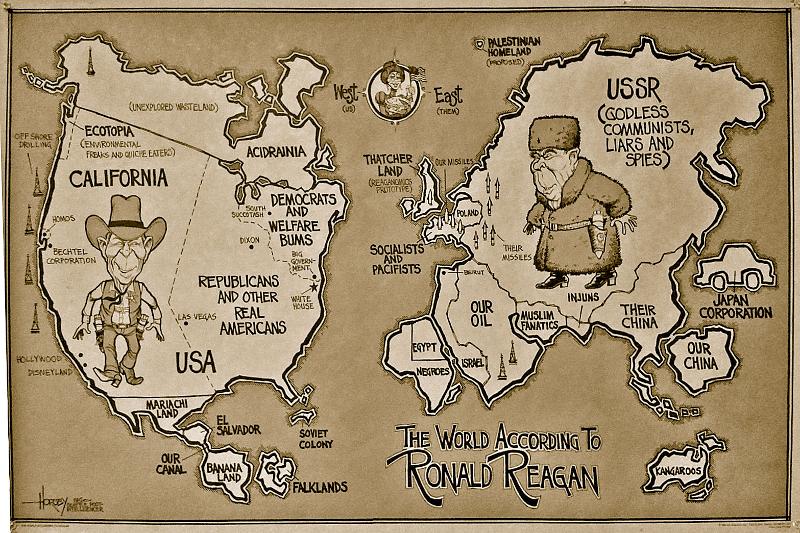
In the online lecture, it talks about the cold war. It starts with the concept of a single country with power feels threatened if another major power comes along, like Greece was taken over by the Macedonia's and the Italians by the French and Spanish. World War II in Europe's independent state, ceased to exist powerful states Soviets and United States determine the fate of Europe. Also, the Soviet tried to invade Poland, but they liberated themselves before being invaded. The United States saw the liberation of West Berlin a sign of war because it was on their side of liberation because they liberated them. By the 1948-1949 the Soviets created a bloc and fenced their borders so no one could go in or out. At the same time the West countries liberated by the US created a defensive policy called NATO against the Soviets. In 1959 the Soviets created a similar defensive system called Warsaw Pact, where they would defend themselves if the US attacked them.
38-3 "End of the Cold War"
In this section I learned how the Cold War ended. This section talked much about how the Soviets imposed government where the gave the people the right to "choose" the type of government they wanted and surprisingly was communism. Lots of countries tried to contain communism such as the US and Hungary and Yugoslavia didn't get taken over by the Soviets due to their already-communist government and didn't fall into the hands of Stalin, making it the only country independent with communism. Also, the position of their new president tried to improve Soviet economy but ultimately failed due to the minorities trying to liberate themselves, others remained loyal. This section helped me better understand how the Soviet system failed and ended.
38-2 "Challenge to Superpower Hegemony"
In this section I learned about how France was trying to become a major power again. In western Europe, French politicians sought to free the nation from superpower dominance by transforming Europe into a strategic bloc. This failed because although it was set with cautious it was a more political independent course on the part of western Europe. Under President Charles de Gaulle pursuited independence from dissatisfaction with the international order dictated by leaders of Washington and Moscow. He also persuaded independent policies, French military put together a nuclear delivery system consisting of long-range bombers and land-and submarine-based missiles. I also learned about the "de-Stalinization" which was a policy applied by Khrushchev was to end the terror and partial liberation of the Soviets. This period lasted from 1956 to 1964 also brought control to government and helped release of millions of political prisoners. The Prague Spring, was a political liberation in Czechs during the era of its domination by the Soviet Union. This helped me better understand the political policies going on during the cold war.
38-1 "The Formation of a Bipolar World"
In this section I learned about how the Cold War began. The manifestation cold war was division of Europe continental competing political, military and economic blocs separated by what Winston Churchill called and iron curtain. The Soviet retaliated by blocking all road, rail and water links between Berlin and West Germany. On June 1948 announced that, that administration of Berlin and was no longer in effect. First the Americans and British responded with an airlift designed to keep the city's inhabitants alive, fed, and warm. It also talked about the Berlin's wall, which was and act of communism reinforced their fortification along the border between East and West Germany, following the construction of a fortified wall dividing the city of Berlin. The wall quickly turned into a deep barrier, replete with watch towers, search lights, antipersonnel mines and border guards ordered to shoot and kill. This section gave me a better understanding of the actions taken at the Cold War and how it affected afterwards.
Chapter 37 "New Conflagrations: World War II"
37-3 "Life During Wartime"
In this section I learned about how life was during the wars. Hitler's racist ideologies caused how territories were administered. Japanese and Germans authorities administered their empires for economic gain and to exploit resources from their land under their control;the most notorious form of economic exploitation involved the use of slave labor. Occupation and exploitation created resistance: campaigns of sabotage, armed assaults on occupation forces and assassinations, others resisted and hid protected refugees or passed on clandestine newspaper. Occupations forces did not hesitate or retaliate when resistance to occupation, resisters kept alive their nations hope for liberty. Women who joined the military services that usually took jobs on factories but things started to change but only temporarily. After the war women warriors expected to assume traditional roles as house wives and mothers. This section helped me understand better how people were affected by the second great war.
37-2 "Total War: The World Under Fire"
In this section I learned about the battles that occurred in WWII. World War II was a new kind of war because most countries developed new kind of deadly weapons, a war that almost every country participated in. Nations avoided declaring war and instead used surprise, stealth and swiftness in conquest. Britain and France tried to defend the Atlantic, France lost and submitted to the Germans. Germans fought against Britain in an air attack called "The Blitz" and eventually the Royal Air Force. Hitler conquered Balkan, battlefront in North Africa, when fought British and Italians. On June 1941 Germans fought with the Soviet Union. The Red Army was caught by surprise and by December Hitler had already captured Russia's heartland, though he underestimated their power. After a few months the Germans were outnumbered and Russians moved their factories to the mountains so they wouldn't get damaged during the battles and the economy maintaining safe.Winter helped Russians retake Moscow. This section helped me understand better how the Germans were going crazy with power.
37-1 "Origins of War World II"
In this section I learned about how the Axis power, Allied power and Common wealth surged and led to World War II. The Axis power were Italy, Germany and Japan. The Allied power was France, Britain; the Common wealth was composed of Canada, Austria and New Zealand. Global conflict between Japan and China over Manchuria; lost their government and military control. Japan invaded Beijing and moved the war to Shanghai and then to Nanjing 1937 China fell. World War II mass death and suffering Japanese felt racial superiority bombed, raped and killed. Japan signed a ten-year military and economic pact with Tripartie Pact. Italy's expansionism helped destabilized the post-war peace and spread WWII to Europe. Mussolini conquered Ethiopia and intervened in Spanish Civil War, after previous attempts. Germany undid the Treaty of Versailles ----> Hitler!! resented harsh imposed terms in 1919 most countries understood Germany's burden and did nothing due to respect. German control of western Poland and Lithuania, Soviet Union gained freedom from eastern Poland and eastern Romania. This section helped me understand better about World War II the beginnings.
Chapter 36 "Nationalism and Political Identities in Asia, Africa and Latin America"
36-3 "Latin American Struggles with Neo Colonialism"
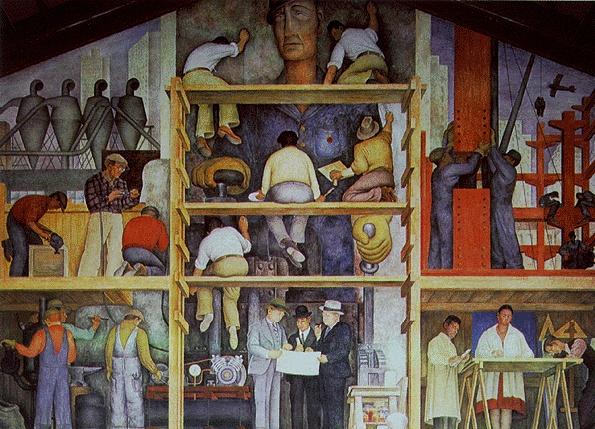
In this section I learned about how Latin America embraced nationalism. Neocolonialism took shape as a foreign economic domination but didn't exclude more imperial actions like military, political and social interference. The Great War and the Russian Revolution spread ideas and promised possibilities in Latin America. Many people contributed positive changes in Latin America, such as Diego Rivera and Jose Carlos Mariategui. Diego Rivera was a famous painter who painted his political visions in murals, also he incorporated political ideas into his murals. Export-oriented economies subjected to control imposed by foreign investors. President William Taft developed foreign markets through peace and avoided military force. The economic depression integrated the global economy, increasing investments came financial problems. For example, since most Latin America exported raw materials weren't very effects to the Great Depression. Instability of global politics led to a reassurance of US foreign policy in Latin America. US military force rely move on "dollar diplomacy" that questioned US neocolonialists. I learned that Latin America came into great changes that would cause disruption.
36-2 "Africa Under Colonial Domination"
In this section I learned about how the Great Depression affected Africa. Every African colony took sides in the war. Germany had carved out colonial empires in Africa, which were Togo, Cameroon, German South-West Africa and the German East Africa. The consequences were that Africans went to war with Germany in 1914 and allies also invaded Germany. Colonial taxation was designed to drive Africans into labor in order to earn money to pay the taxes levied on land specialized in one or two crop, usually to export. Colonialism prompted the emergence of the novel African class called "the new elite" which were mostly civil servants, physicians, lawyers and writers, whom studied in western Europe or the United States. Although some individuals were self-employed, like lawyers and doctors most of them held by the government , with foreign companies or with Christian missions. African nationalism embraced European concept of the nation as a means of forging unity among disparate African groups. This section helped me understand how Africa took nationalism adapted.
36-1 "Asian Path to Autonomy"
In this section I learned about how China, Japan and India reacted after the Great War. Indian nationalism threatened the British empire's hold on India. The association that dedicated the struggle against British rule was the "Indian National Congress". Supported Muslims and Hindus at first to collaborate with the British to bring self-rule back to India. The formation of the Muslim League encouraged the British government added into the movement of national liberation. During the Great War, Muslims and Hindus joined to the British cause and nationalist movement remained inactive. China's revolution in 1911, emperor Xuantong abdicated his throne and the Qing dynasty fell. Dr Sun-Yatsen became China's first president as a Republic society. He called elimination for special privileges for foreigners, national reunification,economic development and democratic republican government based on universal suffrage. After joining the League of Nations, Japanese government entered into a series of international agreements that sought to improve relations among countries with conflicting interests in Asia and the Pacific. This section helped me better understand how countries embraced the sense of nationalism and freed them from foreign dominion, it also helped me understand better how countries started to connect to each other to avoid wars and have a benefit of their peaceful relations.
Chapter 35 "An Age of Anxiety"
35-3 "Challenges to the Liberal Order"
In this section I learned about Joseph Stalin and Benito Mussolini. Stalin first served as a bureacratic general secretary that promoted the idea of socialism. He decided to replace Lenin's NEP with the Five Year Plan, which increased productivity in all spheres of the economy but emphazied heavy industry at the expense of consumer goods. The Soviet also, expropriated privately owned land to create collective farm units to give up their land, basically to make the wealthy wealthier and poor even more poor. Stalin became a powerful-feared dictator that consolidated power over Russia. On the other hand Benito Mussolini created fascism, which was a political movement that sought to create a reaction against liberak democracy and the spread of socialism and communism, and created Italian Fascism. He stated that the Great War would effectively turn the nation. He had public support that resulted effective because it was a passive way to communicate to the people by the newspaper he founded "Il Popolo D'Italia". This section helped me better understand how the global depression spread differentely in different countries created by not only the war but by dictators.
35-2 "Global Depression"
In this section I learned about how after World War I the economy in all of the countries that participated went in a crisis. Europe tied to an angled financial system that involved war debts among the Allies. Global economy in the 1920's was the depressed states of agriculture, overproduction and decreased prices. Decrease in business activity, wages and employments. Also, consumers demanded to purchase all goods respond in cut backs. U.S investors collapsed at stock prices , tried to raise money by calling loans and liquidating investments. The Great Depression destroyed financial and communication networks of national capitalism. 1933 unemployment in industrial societies reached 30 millions more than five times higher. Men lost their because economic contraction and combination of economic trends . It also brought gloomy statistics domenting the failure of economics did not convey anguish. Charles Ritchet insisted in removing women from the wokr force would solve the problem of male unemployment and increase the nations low birth rate. This section helped me understand better about the economic crisis the world was becase of the total war.
35-1 "Probing Cultural Frontiers"
In this section I learned about the new theories and cultural changes after the Great War. It said that the Great War destroyed beliefs in the universality of human progress. It meant that people would start to progress and religions and beliefs would be questioned because of science and technology. Also things started to change, like in the government, people agreed to democracy because they would have a voice in selecting the leaders in their government. These types of developments started to led to an unprecedented degree of political participation as millions of people voted in elections and referendumms. Often common people would argue that democracy was corrupted, lacking in positive values, many people instead idolized wealthy elites. The postwat also experienced a revolution in physics and transformed science. Albert Einstein, was one of the first scientists to bring forth their theories, such as special relativity, where there is no single spatial or chronological framework in the universe. Werner Heisenberg, also explained that it was to I'mpossible to specify simultaneously the position and the velocity of a subatomic particles. This section helped me understand better about a science revolution and an art revolution at the postwars.
Chapter 34 " The Great War:The World in Upheaval"
1-24 On the Russian Revolution
In this audio lecture I learned about the Russian Revolution. 1917 people started to strike against the government, and workers demanded toward their economic and social status. The Russian Revolution consisited of two mayor battles. in February Romanav abdicated due to strikes in Petrograd, Parliament lasted months. In October in the 17th century Bolshevicks created the Soviet, it also lagged economic and political develpment respected humans, social equality human dignity, ambitious utopian on earth. Also, the reform didnt work, government realizes to conservatism and to backwards needs to modernize and reforms destabilize the country creating a foundation for a better future. In the mid-18th century Alexander II reformed Russia , poverty in countryside serfdom slavery mayority if their populations , famines economy were backward liberating the serfsto give them legal rights. Slaves were free, laborers buy themselves out of the economy and populationof peasants didnt get freedom , dissapointed 20th century rule crisis in 1917 strikes in Petersburg pressure tsar Nicholas to create Durma, a russian parliament. This audio lecture helped me understand better about the battles thah make the Russian Revolution.
34-3 "The End of War"
In this section I learned about the Revolution of Russia. The Revolution of Russia spread as two governments started to emerged: the provincial government and the Petrogard Soviet of Workers and Soldiers deputies. They would control factories and segments of the military. Vladimir Lenin was a revolutionary marxist, he devoted himself to Marxist thoughts and writings political pamphlets. Lenin wanted Russia to go under the idea of Marx, which was for Russia to convert into a communist government, but they were industrialy behind in technological innovations and skipped many steps that involved marx had planned as a semi-perfect society. At first Lenin was exiled to Switzerland but the government hasd sent them over there because they knew that he was powerful and considered him a threat but as German stuggled the government knew that Lenin could stabilize Germany. Bolsheviks small minority working class revolutionaries instability to feed population and refusal to take the land reform. Menshaviks members of liberal factions inside Russias and were the mayority. This section helped me better understand what was going on with Germany after the war.
1-21 Shooting an Elephant
In this online lecture i learned about The Great War. It talked about how Austria declared war on Serbia, but Serbia had Russia in their side because they belonged in the same ethnic group and Russia wanted to take over them. But Russia also supported France and France supported Britain, most of the time in secret alliances. Russia, France and Britain were called the Triple Alliance, The Treaty of Versalilles, became a harsh punishment to Germany, because most of the other countries wanted Germany to be punished for destroying their cities so Germany, was sentenced to pay for all the damages of any country in the alliance of the treaty. There were also secret treaties that were short term, because the countries would break them at their conviniance. It also said that industrialization changed the war because it produced new weapons that would kill people in massive numbers. Which killed and deformed many men, and population decreased as people would get pulled into war, and with all the new technology theyr didnt know or have the knowledge to cure them. This audio lecture helped me understand better about the Great War and the components that helped this catastrophe emerge.
34-2 "Global War"
In this section I learned about countries fighting each other globally. Many Europeans expected war as a liberating pressure that would solve their interior problems. People were enthusiastic when their government announced formal declerations of war. Total war went beyond European borders. Imperial ties drew Asians, Africans and British into war to serve as soldiers and laborers. The war mattered little to Japan, United States and Ottoman Empire who had to do with European affairs. Stalemate wars introduced technological developments that favored defensive tactics. Barbed wires, poison gas, machine guns, tanks, airplanes, submarines, etc. The war also changed social lives as much as it took them. Due to conscription taking men out to the labor force women would fill in the gaps. Some women took over the management of farms and business left by their husband. Women would also go to battle as nurses, physicians, and comunication clerks. Middle- and upper- class women reported war as a liberating experience , freeing them from older attitudes that limited their work and personal life. This section helped me understand better about the effects of war.
34-1 "The Drift Toward War"
In this section I learned how nationalism expandedand the battle between countries. Nationalistic movements , revolutions and wars led Belgium to gain independence. The French Revolution and the Napolionic conquest spread nationalism throughout most of Europe. National aspirations of the subjected minorities thereatened to divide multinational empires of the Ottoman, Habsburg and Russian dynasties. Pan-Slavism, was a 19th century movement that streesed the ethnic and kinship of Slavic people . Serbs promoted it because they wanted to unify the kingdoms of Serbia and Russia also supported it. Also, agressive nationalism manifested competition and colonial conflicts, fueling dangerous rivalries among European power. A basic desire for security, made national rivalries and nationalist aspirations created alliances. National interest was in search for allies, each nation viewed its fufillmentof treaty obligations as crucial to self-preservation. Under the alliances, the obligations outlined which countries would go to war to support each other. This section helped me better understand about how countries would go to war and their motives to do so.
Chapter 32
32-4 "The Transformation of Japan"
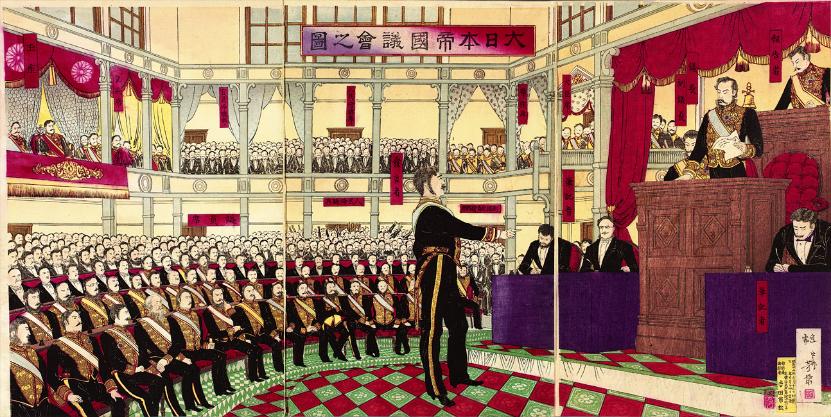
In this section I learned about how the Tokugawa shogun came to decline while the Meiji Reform took place in Japan. By the early nineteenth Japan experience declining agricultural productivity. Periodic crop failures and famines, and harsh taxation contributed to economic hardship among rural population. Japan experienced peasant protest and rebellion , the Tokugawa bakufu responded with conservationists reforms. Between 1841 and 1843 shogun's chief advisor Mizuno abolished merchant guilds and canceled debt for the daimyos and samurai, who eventually become a successful business owners. Meiji restorations returned authority to Japanese emperors and brought an end to military government. The Meiji government created a modern transportation, communication and educational infrastructure. New methods of communication like the telegraph, railroads and steam ships tied local and regional markets with a national economic network. This section helped me understand better about how Japan became one of the most successful empires at the time.
32-3 "The Chinese Empire Under Siege"
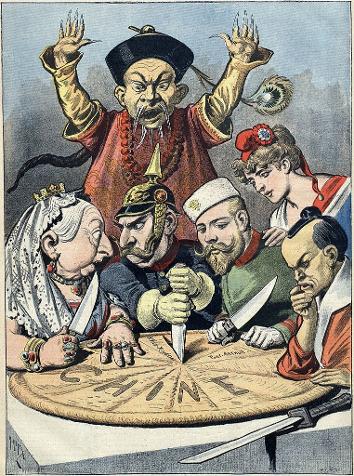
In this section I learned about how the Qing dynasty was the least successful in this period and experienced economic difficulties. The Opium trade was a serious threat to the the Qin dynasty in the nineteenth century and created social problems. Trade in opium was illegal and continued because authorities showed little effort to stop and corrupt officials benefited from it. However, government officials became aware of the situation and stopped trade but British merchants started to lose money, thus creating a war and China losing. The Opium War commander Lin Zexu directed to stop trade but British didn't agree, and retaliated and easily crushed Chinese troops which also destroyed Grand Canal. Unequal treaties forced trade concessions. In the Treaty of Nanjing, British had gained right to opium trade with most favored nation status, also Hong Kong opened trade ports with exemptions from Chinese laws, that forged similar unequal treaties to other western countries such as Japan. The Taiping program was proposed by Hong Xiuquan, which called for the end of the Qing dynasty and resented Manchu rule due to being foreigners. They radically changed social lives, such as not having private property, prohibition of foot binding and concubinage. It became very popular in southeast China and seized Nanjing in 1853 and moved to Beijing.
32-2 "The Russian Empire Under Pressure"
In this section I learned about how Russia's government decided to adopt the Industrialization process. The tsars weren't willing to give up their autocratic power to let the commerce rise on its own thus creating a crisis and it to explode in the revolution. Also, industrialization was a difficult to achieve due to the vast majority of population were serfs, which meant that they were tied to land, it was as cruel as slavery but it guaranteed social stability. The Crimean War only emphasized that Russia could not win with Europe, mostly because of its military unpreparedness. It demonstrated the weakness of an agrarian economy based on unfree labor which caused to tsars to reevaluate social order and a reconstructing program. Tsar Alexander II abolished serfdom, but peasants won few political rights and had to pay redemption to most land they received. By the nineteenth century Russian industrialization took place as a motivation for the development was political and military though, was within a framework of capitalism. People weren't pleased with this because of the low wages and the poor working conditions. In 1876 a group called Land and Freedom Party assassinated many Russian officials that pressured the government in political form. In the end Duma was established Russia's first parliament.
32-1 "The Ottoman Empire in Decline"
In this section I learned about how the Ottoman began to decline due to their lag in military purposes. By the late seventeenth century the Ottoman began to experience many defeats on the battlefields to Austria and Russian enemies. The Janissaries neglected military training and didn't encouraged the development in advance weaponry, thus making the central government fall apart. Ottoman also fell behind with the industrialization, unlike in Europe where they didn't need the Ottomans that much any more to their efficiency to create mass production of goods. Mahmud II became sultan in 1808 and launched his own reform program against the European powers and the local separatists ambitions of local rulers. This Reform created a constitution that limited the power of the sultan and established a representative government. The Young Turks promoted reform and fought for equality before the law, universal suffrage, free education, and emancipation of women. They also aggravated tensions between Turkish rulers and subjected people ouside the Anatolian the heart of the Ottoman empire. By the twentieth century Ottoman empire survived due to Europeans not knowing how to dispose of it without upsetting European balance of power.
Chapter 31
31-3 "American Cultural and Social Diversity"
In this section, I learned about the diversity among the Americas and the conflicts that were brought with it. By the late nineteenth century the United States had become a multicultural society. Migrants and slaves from Europe to Asia went to the Americas in the need of labor and most of the time were brought by force to work in the sugar or cotton plantations established there. Though politically and economically all power rested in white male elites of Europeans. Also, as they expanded to the west, they would encounter indigenous people and enter into their reservations and still increasingly force them into marginal territories still preserving their traditions but outside where they would eventually dying out in number. The Civil war ended slavery ended slavery but did not bring instant equality for freed slaves. The Reconstruction extended the civil rights to free slaves and provided black men with voting rights. Even before the Civil war women start to make movements that emerged in the United States. In Latin America various groups of mixes of ancestry being to assemble, such as mestizos, mulattoes, zamboes and castizos. This section helped me understands better of how the social groups would mix with one nation and cause positive and negative effects in their settlements.
31-2 "American Economic Developments"
In this section I learned about the mass migration and British investments, which shaped economy throughout America. The economic development of the Americas was the mas migration of European and Asian people. Gold drew people to the Americas, mostly migrants to make their way in factories, railroad construction sites and plantation in the Americas. After the mid-century Europeans moved to North America where they would work in the US due to their lack in attracting people to work heavily for a low wage. In the 1850's Europeans migrated to the US by millions. The British investment influenced Canadians. During the early nineteenth century paid relatively high prices for Canadian goods and natural resources , partly to keep colony stable and discourage separatists movements. Also British had no intention of helping Latin america, mostly because they offered nothing good that they wanted. Nevertheless, British merchants investors took advantage of opportunities that brought them profits and considerable control over Latin American economic affairs.
In this section I learned how slavery sparked a massive civil war in 1860's and began and what happened to nations as they began to expand. After gaining independence United States began to create a government that would bring stability. They drafted the Declaration of Independence based on Enlightenment thoughts about "all men are equal" , it encouraged political leaders to enable all white men to participate in political affairs of the republic. Canadian independence was a peaceful one. It agreed with the British government on principles of the right to self-govern. Which also created two ethnic groups, the British Canadians and the French Canadians. Latin America also accepted the Enlightenment ideals but didn't know how to put them to practice. Less than 5% of Latin American male were active in their political affairs. Independent Mexico experienced caudillo rule, that generated political liberal reform. La Reforma guaranteed the male right to vote in political affairs and the right of freedom of speech. It also challenged fundamental preservation of Mexican elites that opposed politically ,socially, and economically. This section helped me understand better how the Enlightenment ideals made a change in conservatism Mexico.
Chapter 30
30.3 "Global Effect of Industrialization"
In this section, I learned about how Russia and Japan take in Industrialization. In Russia, the tsarists government promoted industrialization by constructing railroads. This facilitated transportation of goods creating a commercial link between western Europe and East Asia, also it stimulated developments of coal, iron and steel. In Japan the government pushed industrialization by opening mines, organizing banking systems, establishing mechanized industries etc. The Tokugawa shogunate copied the West because they knew that if they wanted to industrialize properly they needed to give up a considerate amount of their power to let the economy flow independently instead as enforcing it, like what the Russian government did to Russia. Zaibatsu were similar to the trusts and cartels that emerged in the nineteenth century. On a different note the industrialization process influenced the economic and social developments because it promoted new international division causing the demand for raw materials to supply their factories. This section helped me understand better about how other governments took the industrialization and what they did to show their support and how the new technologies made industrialization give a global effect.
30.2 "Industrial Society"
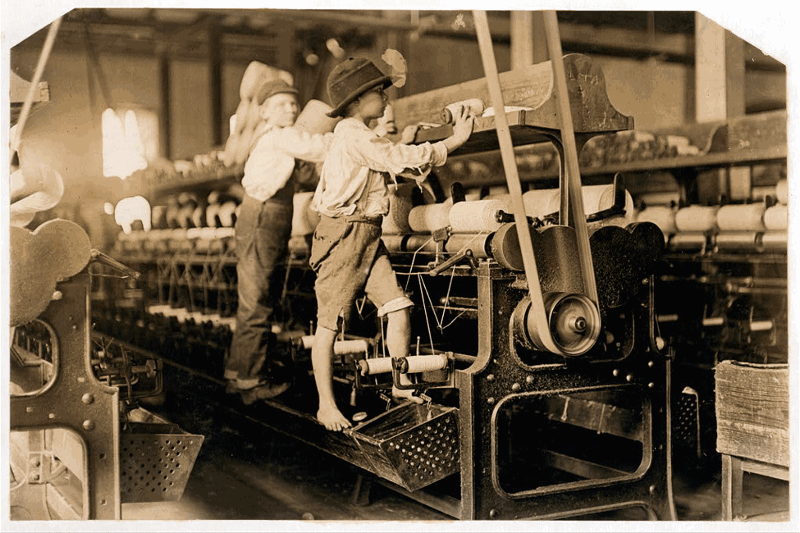
In this section, I learned that Industrialization had positive changes that benefited Europeans and their ways of life. During the 1700 and 1800 European population increase from 105 to 180 million. This was due to high levels of fertility and birthrates, also their diets improved and so did their sanitation, which led to the decrease in mortality with adult and infants. Demographic transitions established of fertility stability, birthrates declined and it led to controlled population growth, the reason toward this was voluntary birth control. Industrialization also had social impacts like the high class was composed of captain industry, enterprising business people became wealthy and powerful enough to overshadow military aristocracy like it traditionally did. They also encouraged the disappearance of slavery in lands undergoing industrialization partly because it costs less hiring someone than taking care of multiple slaves, which would not be profitable to business. Some negatives aspects were that it reshaped family. By moving economic production outside home and dividing family life with work family member would have different shifts to work and would not interact as much as they would in the past. Which brings up child labor. Children were taken away from dawn to do industrial work and would be tortured to keep awake till nightfall, yet many families needed or depended on the payment of their children to survive. In 1840 British Parliament began to pass laws which enabled children to stop working and require to go to school to get an education as their only obligation. This section helped me better understand how the new era of machinery benefited the people and what changes they made to society to thrive as a nation.
30.1 "Patterns of Industrialization"
In this section, I learned about the Industrial Revolution and how it made production of good by machines rather than hand-made, it also impacted regions differently and how the people reacted to it. Industrialization was composed of different factors to keep it functioning like coal, steam power, steel and iron, transportation technology etc. Great Britain industrialized first mainly because of its geographical locations and its natural resources like coal and iron. British authorities forbade the export of machinery , manufacturing etc, which caused foreign countries to ignore government regulations and to learn British techniques at any way as long as they had their advanced machinery. Eventually industrialization reached to France, United State, Germany, Belgium etc. Napoleon contributed to Europe by abolishing internal trade and broke guilds. Machine-center factories also brought negative and violent protests. Different organized bands were created such as the Luddites, they would break into textile factories and destroy machinery because workers were getting pay in low amounts, the government noticed and was intolerant about it and the movement died away. In addition the industrialization and its technological advances brought positive and negative process globally. This section helped me get a better understanding of what type of impact of the industrial revolution gave and the process it had to go through.
